
info@travel.se
@travel.se_main

First things first: Lapland is not a country
A quick geographical reality check: Lapland is not an independent country. It is a vast cultural and geographical region stretching across the north of Finland, Sweden and Norway, and part of Russia. The Lapland region corresponds to Sápmi, the traditional and cultural homeland of the indigenous Sámi people.
Both Swedish and Finnish Lapland lie above the Arctic Circle and offer that quintessential Arctic winter experience: snow-covered landscapes, short days, husky and reindeer treks, snowmobiles and, of course, the chance to see the Northern Lights.
Why everyone goes to Rovaniemi, and why you might want to look further
Planning a winter holiday to Lapland? Here’s what you need to know before choosing your trip.
Lapland has been on many people's bucket lists for years. And as soon as you start looking into a trip, you will almost automatically end up in Rovaniemi. It makes sense: Rovaniemi is well known, easy to reach and has everything you could want from a classic Lapland holiday. But while it is famous, Rovaniemi might not be the right place for everyone's Lapland trip.
The city in Finnish Lapland has become one of Europe's best-known winter destinations. Especially around Christmas, many travellers head here to meet Santa Claus, see reindeer, go on husky safaris and, of course, search for the Northern Lights. It is popular, perhaps to the point where it takes a little away from the beautiful nature that Lapland has to offer. Because here, you are almost never the only one.
During the busiest periods, it can get quite touristy. You share popular activities and attractions with plenty of other travellers, and some experiences can feel more like an excursion than a discovery.
So, what is the alternative?
There are countless beautiful places to discover in Lapland. Many of them are hidden away in Sweden.
Swedish Lapland covers a huge area of snow-covered forests, frozen lakes, mountains and small towns where life naturally slows down a few gears. Unlike Finnish Lapland, a winter holiday here isn't centred around one famous attraction.
There is no Santa Claus. Let's get that out of the way. But what you do get are those same beautiful husky tours, snowmobiling through seemingly endless landscapes, and the opportunity to meet the Indigenous Sámi and learn about their culture (from walking with reindeer herds to baking bread in lavvu tents), and much more. And above all, there is the place where you stay, which, let's be honest, is pretty important too.
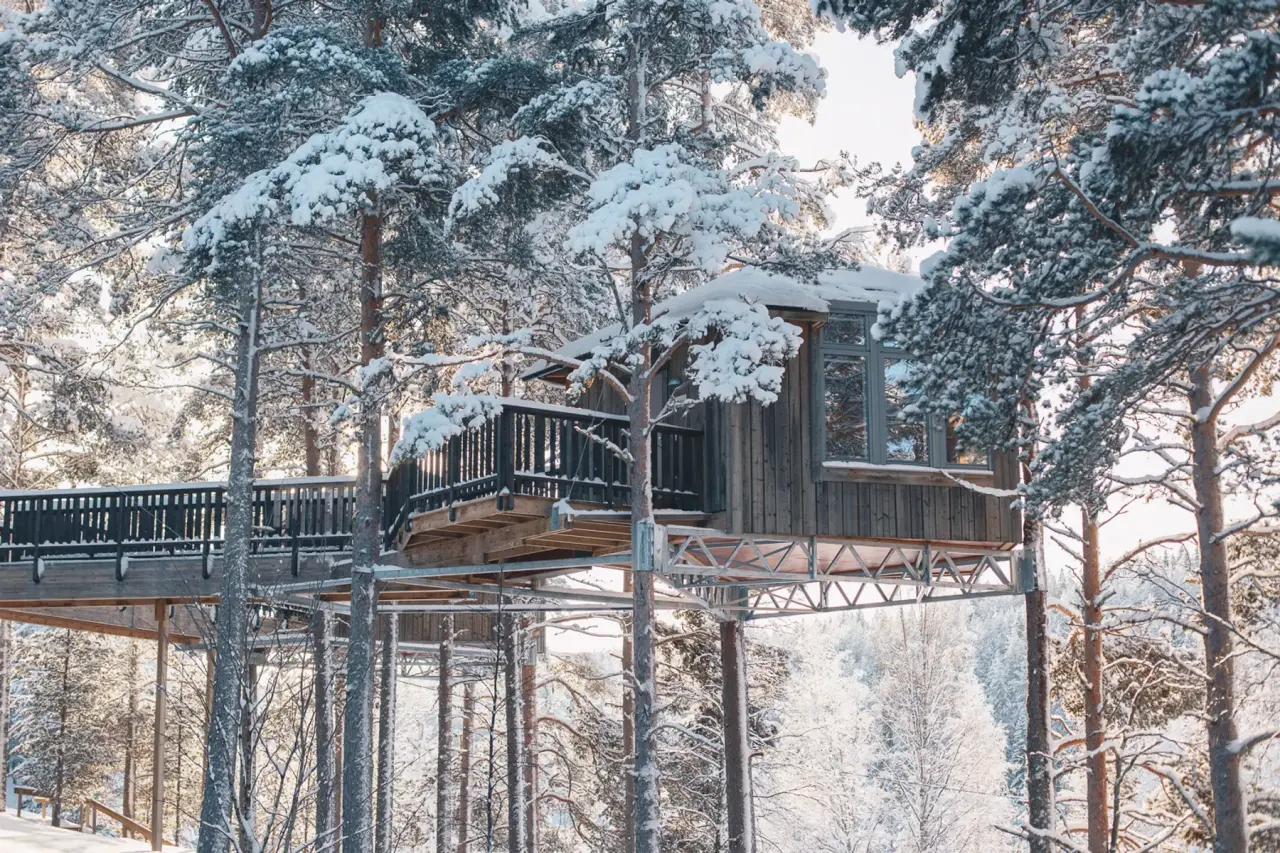
Swedes are modest. And Swedish Lapland is too. So while Google may give Finland a little extra attention, there are some truly incredible places to discover in Sweden. Think glass cabins in the middle of the forest, floating treehouses, secluded private stays, and more. The best part is the variety: there are beautiful places to stay with your family, as well as more exclusive spots for couples looking to share a truly special experience.
What do you need to know before your Lapland trip?
There are a few things that are good to know before you start booking. Let's take you through them!
When should you go to Swedish Lapland?
The main winter season in Lapland runs from November to March, but every month feels a little different. Travelling during the school holidays? Then December and February are naturally the obvious choices. December is all about that cosy atmosphere. The days are short, but the evenings are wonderfully cosy. January is much the same: deep snow, extremely low temperatures and the shortest days of the year.
Coming in February? You will still have that thick layer of snow, but this time with a little more daylight. So if you want longer days, this is your best choice! Keen to pack in lots of activities? March is a great option. With slightly milder temperatures and plenty of daylight, it is much more appealing to spend long days outdoors.
Is Swedish Lapland suitable for families?
Yes! You definitely don't need to be an experienced adventurer to enjoy a holiday here. Lapland is fantastic for families and a guaranteed once-in-a-lifetime experience for the kids. All activities in the region can be adapted to the age of your children, from sleds pulled behind a snowmobile to husky sled rides and gentle reindeer encounters. And because the days are relatively short, the youngest ones don't have to stay up all night to see the Northern Lights.
No kids? It's just as fantastic. Swedish Lapland has some truly unique hidden-away accommodations designed specifically for travellers without children. Depending on how you travel, we'll look at which places suit you best!
Do I need to prepare anything for a trip to Lapland?
It's always good to read up a little before you go, so you know where you're heading and perhaps learn a bit about Sámi culture. But the real adventure starts once you arrive.
The Swedes know all too well that low temperatures, deep snow and short days aren't familiar to everyone. So they don't expect you to step off the plane fully prepared. Our partners always have all the gear you need available, including warm jackets, proper footwear, gloves and more.
We also always recommend including a Sámi experience in your trip. This could mean walking with reindeer, horse riding, sharing a meal with Sámi people, and more. During these experiences, you can learn about Indigenous culture directly from the people who know it best.
How many days do you need for a Lapland holiday?
Our tip? Around 6 to 8 days. About a week!
It can sound tempting to go husky sledding, snowmobiling and have an outdoor dinner all in one day, but you'll soon discover that it takes quite a bit of energy. It's no coincidence that most trips last around a week. This gives you enough time to do the activities you're looking forward to, while also having time to enjoy the peace and nature.
Should I organise a Lapland trip myself or book through a travel agency?
Lapland is a very different destination from a traditional ski resort. Not everything is located close together, the logistics are more complicated and every place has its own character. We are, of course, biased, but with the best intentions, we'd say that a trip to this region is best booked through a travel agency.
Our favourite way of working? You tell us what kind of trip you're looking for and roughly when you want to go. Based on your group and your wishes, we'll look at which places would suit you best. We'll discuss everything together based on a proposal and keep fine-tuning it for as long as needed, until you have your ideal trip on paper.
